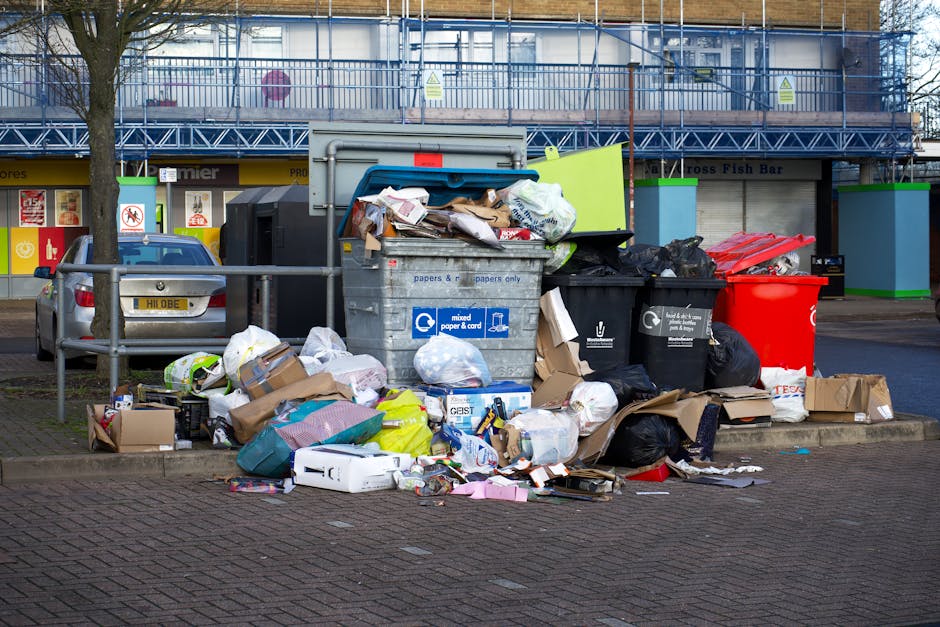
Avoid fines: Westminster Council recycling and disposal rules
If you live, work, manage a flat, or run a business in Westminster, getting waste sorted properly is not just a tidy-up job. It is one of those everyday tasks that can quietly turn expensive if you get it wrong. The rules around recycling, food waste, bulky items, commercial waste, and street disposal are there for a reason, but they can still feel oddly confusing on a busy weekday morning when the bags are piling up by the door.
This guide breaks down Avoid fines: Westminster Council recycling and disposal rules in plain English. You will find what the rules mean in practice, how to follow them without stress, common mistakes that lead to problems, and the sensible next steps if you need reliable waste support. To be fair, most penalties are avoidable once you know the system. The tricky bit is usually the little details.
If you are comparing waste services or want to organise disposal more efficiently, you may also find it helpful to look at flat clearance in Westminster, house clearance support, and rubbish removal in Westminster as part of planning a compliant collection approach.
Table of Contents
- Why Westminster recycling and disposal rules matter
- How the rules work in day-to-day use
- Key benefits and practical advantages
- Who needs this guidance and when it makes sense
- Step-by-step guidance
- Expert tips for better results
- Common mistakes to avoid
- Tools, resources and recommendations
- Law, compliance, standards and best practice
- Options and comparison table
- Case study or real-world example
- Practical checklist
- Conclusion
- Frequently asked questions
Why Westminster recycling and disposal rules matter
Waste rules are not just about keeping pavements clean, although that matters a great deal in a dense place like Westminster. They affect how bins are presented, how food waste is separated, what can go in recycling, and what happens when items are too large for a standard collection. If waste is left out incorrectly, contaminated, or dumped where it should not be, the outcome can be a warning, an enforcement issue, or in some cases a fine.
There is also a practical side that people sometimes miss. Proper recycling and disposal helps avoid missed collections, reduces smell and pest problems, and keeps shared entrances and bin stores more manageable. In a block of flats, one neighbour's mistake can affect everyone. In a small business, one poor habit can lead to recurring waste problems that become a nuisance fast.
Quick takeaway: the safest approach is simple sorting, using the right containers, putting out waste at the right time, and never assuming a bag "should be fine" just because it looks tidy. Westminster waste rules are often stricter in practice than people expect.
For landlords, managing agents, and business owners, this also touches wider property standards. If you are coordinating clearances around a tenancy change, for example, it can make sense to combine collection planning with a property tidy-up through services such as end of tenancy cleaning in Westminster or office clearance so waste is handled properly from the start.
How Westminster recycling and disposal rules work in day-to-day use
At a practical level, the rules work by separating different waste streams and making sure they are presented correctly for collection or removal. The broad idea is easy enough. Recycling goes in the recycling stream, food waste goes where food waste should go, general rubbish is kept separate, and bulky or hazardous items need special handling. The small print is where people trip up.
In most everyday situations, the key questions are these: What type of item is it? Can it be recycled cleanly? Is it contaminated with food, liquids, or mixed materials? Does it need to go to a particular collection service? If you can answer those quickly, you are already ahead of the game.
There is also a difference between household waste and business waste. Businesses generally have a separate duty to arrange lawful waste collection and to use authorised carriers. That means the old habit of "just put it by the communal bins" can land you in trouble very quickly. Westminster is not the sort of borough where waste just disappears on its own. Nice try, though.
For one-off items, residents often need to check whether a bulky collection, reuse route, or licensed removal is more appropriate. If the item is too large, too heavy, or too awkward for regular bins, a managed collection is usually safer than leaving it out and hoping for the best. If you need a broader property clearance solution, garage clearance in Westminster and garden clearance can be useful comparisons for different waste types.
Key benefits and practical advantages
Following the rules properly does more than help you avoid fines. It makes life simpler. That sounds basic, but honestly, tidy waste routines save time, reduce stress, and prevent disputes in shared buildings.
- Lower enforcement risk: correct disposal reduces the chance of penalties or warnings.
- Cleaner communal areas: less overflow, fewer smells, and fewer bin store arguments.
- Better recycling performance: cleaner sorting means more material can be processed properly.
- Fewer missed collections: bins are less likely to be refused if they are presented correctly.
- Less pest attraction: especially where food waste, bags, or spillages are involved.
- Better compliance for businesses: helpful for landlords, shops, offices, and hospitality premises.
There is also a commercial benefit. If a business avoids recurring waste mistakes, it usually spends less time dealing with complaints and more time doing actual work. That part is easy to underestimate until you are the one fielding emails about overflowing bins at 7:45 a.m.
A decent waste routine also supports the wider look and feel of the area. Westminster streets are busy, visible, and heavily used. When waste is under control, a property tends to feel better cared for. Small thing, big difference.
Who this is for and when it makes sense
This guidance is useful for a wide range of people, not just households with overflowing recycling bins. In fact, the people who benefit most are often the ones dealing with shared responsibility or time pressure.
- Homeowners and tenants: especially if you are new to the area or moving in and out.
- Flat sharers: where one person's habits can create a bin-store mess for everyone.
- Landlords and letting agents: who need waste cleared between occupancies.
- Business owners: particularly shops, cafes, offices, and service premises.
- Facilities and property managers: overseeing multiple bins, common areas, and collections.
- Anyone arranging a clearance: whether for a room, loft, garden, or entire property.
It also makes sense if you have recently had a missed collection, noticed a warning notice, or are simply unsure what can go where. You do not need to wait for a problem to grow teeth. A quick reset now is far easier than cleaning up after an avoidable issue later.
People often search about waste rules right after a move, after a renovation, or when a shared building starts to smell a bit off in warm weather. That is usually the moment the topic stops being theoretical. You can almost hear the bin lids clanking in the background.
Step-by-step guidance
If you want a practical way to stay on the right side of Westminster waste rules, use this process. It is simple enough to follow, even on a busy day.
- Sort items by type. Separate recyclables, food waste, general rubbish, and items that need special handling.
- Check for contamination. A recycling item covered in food, grease, or liquid may no longer be suitable.
- Flatten and empty where possible. Clean, compact materials are easier to collect and process.
- Use the correct bin or container. Do not mix waste streams just to save time.
- Keep bags secure. Loose waste is more likely to spill, attract pests, or be rejected.
- Put items out at the right time. Early placement can create mess and can sometimes cause issues in shared streets or blocks.
- Arrange a licensed collection for bulky or unusual waste. This is especially important for larger household clearances and business disposals.
- Keep proof of lawful disposal where relevant. Businesses, landlords, and managers should keep records if they are arranging contracted waste removal.
A useful habit is to keep one "decision point" near where waste starts. For example, a note inside a utility cupboard, a simple label in the kitchen, or a small shared instruction sheet in a block entrance can stop confusion before it starts. It sounds minor. It really is not.
If you are clearing a property, it can help to book the relevant service in one go rather than handling items piecemeal. For example, a homeowner might combine a bulky item collection with a general tidy-up, while a property manager may need a broader property clearance in Westminster to deal with mixed contents safely and efficiently.
Expert tips for better results
Most waste problems in Westminster are not dramatic. They are small, repetitive errors that pile up. The good news is that the fixes are usually just as small.
1. Treat the bin area like part of the property, not an afterthought. If the space is cramped, poorly labelled, or hard to access, people will dump things in the wrong place. A cleaner, clearer bin setup changes behaviour faster than reminders alone.
2. Use labels that actual humans understand. "Mixed recycling" is fine if everyone already knows what that means. If not, be more direct. Plain-English signs beat clever wording every time.
3. Handle food residue carefully. Food-contaminated packaging is one of the biggest causes of recycling issues. A greasy pizza box may look recyclable from a distance, but the soiled parts can make it unsuitable. That little detail matters.
4. Keep an eye on timing. In busy areas, bins left out too early can get knocked over, blocked, or associated with the wrong property. Late evenings and early mornings can be especially awkward if everyone is rushing.
5. Separate "unknown" items for a second look. If you are not sure about something, do not guess in the dark and hope. Put it aside and check properly. That is better than contaminating a whole bag or bin.
6. For businesses, train the front line staff. The team member who closes up on a Friday is often the one who decides whether waste is left correctly. A five-minute handover can prevent a complaint on Monday.
7. Keep disposal paperwork in order where needed. For commercial waste especially, records matter. It is not glamorous, but compliance rarely is.
One of the best habits is also one of the least exciting: do a quick bin review at the end of the week. Ten minutes, maybe less. You spot the patterns before they become expensive patterns. And yes, it is a bit dull. But dull is good here.
Common mistakes to avoid
Most fines and warnings come from predictable mistakes rather than one-off disasters. If you can spot these early, you are in a much safer position.
- Mixing food waste into dry recycling: this can contaminate the whole container.
- Leaving bags beside bins: side waste is a common trigger for complaints and enforcement attention.
- Putting out items too early: especially in shared streets where the waste sits around for hours.
- Dumping bulky items without arranging collection: that is asking for trouble, plain and simple.
- Assuming a landlord, neighbour, or cleaner will sort it: responsibility often sits with the person who created the waste or controls the premises.
- Using unlicensed disposal arrangements: this is a real risk for businesses and landlords.
- Forgetting about hazardous items: some items need special handling and should never be treated like ordinary rubbish.
There is one mistake that comes up a lot in shared homes: everyone thinks someone else dealt with the bin, so nobody did. It sounds almost comic, until the communal bin store is full and the recycling has started migrating down the pavement.
If you are clearing out a room, garage, or rental property, it may be smarter to use a structured clearance service instead of trying to make ad hoc trips. That is especially true where sorting, lifting, and transport all need to happen on a tight timeline.
Tools, resources and recommendations
You do not need fancy systems to get waste right. A few simple tools can make compliance much easier.
- Clear labels: useful for shared bins, staff areas, and kitchen sorting points.
- Stackable boxes or sacks: helpful when separating recyclable and non-recyclable items during a clearance.
- A simple checklist: especially useful for landlords, office managers, and flat shares.
- Calendar reminders: a basic collection-day reminder prevents missed presentation windows.
- Dedicated storage space: even a small cupboard or corner can reduce clutter and errors.
- Licensed waste support: for commercial waste, bulky disposals, and full clearances.
If you are handling waste from a renovation, move, or office changeover, it can also help to build your plan around the actual property layout. Narrow stairwells, lift access, parking restrictions, and quiet hours all affect how smoothly a collection goes. Westminster is not the easiest place to assume "we'll just shift it later." Later has a way of becoming awkward.
When a job involves mixed waste or a lot of volume, a combined clearance approach can be more efficient than trying to break it into tiny pieces. If you need support with more than one type of item, services such as loft clearance and removals and clearance can help you plan the process cleanly and avoid leaving anything behind.
Law, compliance, standards and best practice
Waste disposal in the UK is governed by legal duties that affect both households and, more strictly, businesses and landlords. Without turning this into a legal lecture, the key point is simple: waste must be managed responsibly, kept separate where required, and passed to the right collector or disposal route.
For businesses, best practice usually includes:
- using a lawful, authorised waste collection service;
- keeping records where appropriate;
- separating recyclables from general waste;
- making sure staff understand what goes where;
- preventing waste from escaping into public areas;
- taking extra care with food waste, electrical items, and hazardous materials.
For households, compliance tends to be more about correct presentation and avoiding contamination, overspill, or fly-tipping behaviour. But the expectation is still real. If waste is left incorrectly in a way that affects public space or shared premises, it can become an enforcement issue.
The safest mindset is this: if the item is awkward, dirty, heavy, mixed-material, or potentially hazardous, slow down and check the best disposal route. That one pause can save a lot of trouble. A lot.
For shared buildings and commercial premises, written waste procedures are a sensible best practice even when the law does not explicitly ask for a formal policy. They reduce confusion, which is often the real cause of non-compliance.
Options and comparison table
Choosing the right disposal method depends on what you are throwing away, how much there is, and who is responsible for it. Here is a simple comparison that helps frame the decision.
| Option | Best for | Advantages | Watch-outs |
|---|---|---|---|
| Regular council collection | Routine household waste and recycling | Convenient, familiar, usually lowest-effort for residents | Must be sorted correctly; timing and presentation matter |
| Bulky item collection | Large household items, awkward furniture, appliances | Better for items that do not fit in normal bins | May need booking; some items need special handling |
| Licensed clearance service | Mixed property contents, renovations, office changes, larger jobs | Efficient, organised, helpful for compliance and time-saving | Needs clear scope so nothing is missed |
| Self-transport to disposal route | Smaller quantities where lawful and practical | Flexible if you have the vehicle and time | Can be messy, time-consuming, and easy to get wrong |
For many readers, the honest answer is that the "best" option is the one that fits the property, the volume, and the risk level. A one-off bag of clutter is very different from clearing a basement storage room after a tenancy. Different jobs, different solutions.
Case study or real-world example
Imagine a small managed flat building near a busy Westminster street. The residents share a bin store, and one flat has just finished moving out. Over a couple of days, a mix of cardboard, old kitchen items, and a broken chair gets left near the bins because nobody is quite sure what should go where. The bin area starts looking untidy. A food waste bag leaks. The smell reaches the stairwell by the end of the afternoon.
It is a familiar kind of problem. Not dramatic, just annoying enough to become everyone's problem.
What usually helps in that situation is a reset:
- separate recyclables from general rubbish;
- remove contaminated or damaged packaging;
- book a proper bulky collection for the chair;
- make sure the flat move-out waste is cleared fully;
- put clear instructions in the bin store so the issue does not repeat.
If the contents are larger or mixed, a more complete clearance may be the practical choice. A service such as collections can help simplify the process when items are not suitable for normal bin disposal. In real life, that often prevents the cycle of "leave it today, deal with it tomorrow" from turning into a week-long mess.
The real lesson? Most waste problems are fixed by early action and clear separation, not by heroic effort later on.
Practical checklist
Use this checklist before putting anything out for disposal or recycling in Westminster.
- Have I identified the item correctly?
- Is it clean enough for recycling, or contaminated by food/liquid?
- Does it belong in general waste, recycling, food waste, or a special collection?
- Is it too large, too heavy, or too awkward for routine collection?
- Could the item be reused, donated, or passed on safely first?
- Am I responsible for this waste under the tenancy, lease, or business arrangement?
- Do I know when it should be put out?
- Will it stay secure and not spill into the street or communal area?
- Do I need a licensed waste carrier or clearance service?
- Have I kept any necessary records, receipts, or booking details?
If you can tick most of those off confidently, you are in a strong position. If several of them are unclear, that is usually the sign to slow down and ask before disposing. Saves hassle later. Saves money too, usually.
Conclusion
Avoiding fines under Westminster Council recycling and disposal rules is less about memorising every detail and more about building simple, consistent habits. Sort waste properly, use the right disposal route, keep shared areas tidy, and do not guess when an item looks awkward or unusual. Those basics cover a lot of ground.
For households, that usually means cleaner bins and fewer headaches. For landlords, agents, and businesses, it means better compliance, fewer complaints, and a smoother day-to-day operation. And if you are dealing with a bigger clearance, the safest move is often to use a service that can handle the waste properly from start to finish.
Get a free quote today and see how much you can save.
Truth be told, waste rules are rarely the exciting part of property life. But when they are handled well, everything else just runs a bit easier. That quiet bit of order makes a bigger difference than people think.
Frequently Asked Questions
What happens if I put the wrong waste in the recycling bin in Westminster?
Incorrect items can contaminate the recycling load, cause collections to be missed, or lead to enforcement action if the problem is repeated. The safest approach is to keep recycling clean and separate.
Can I leave bags next to the bin if it is full?
Usually, no. Side waste is a common issue and can create mess, attract pests, and increase the chance of problems. If bins are full regularly, the waste setup may need reviewing.
Do businesses in Westminster have different waste responsibilities from households?
Yes. Businesses normally have a stronger duty to arrange lawful waste collection and use authorised providers. It is wise to keep records and make sure staff know the rules.
How do I get rid of large items like furniture or broken appliances?
Large items usually need a bulky collection or a licensed clearance service, depending on the volume and type of item. Do not leave them out randomly and hope for the best.
What should I do with food-contaminated packaging?
If packaging is greasy, dirty, or mixed with food residue, it may not be suitable for recycling. Separate clean parts where possible and dispose of contaminated parts correctly.
Are landlords responsible for waste left by tenants?
Responsibility can depend on the tenancy, the location of the waste, and the arrangements in place. In practice, landlords often need a clear plan for end-of-tenancy waste removal to avoid delays and disputes.
Can I take waste to a disposal site myself?
Sometimes, yes, if it is lawful and practical for the material you have. But for mixed, heavy, or awkward waste, a managed collection is often simpler and safer.
What are the most common reasons people get fined for waste issues?
Typical causes include dumping waste illegally, leaving rubbish in the wrong place, poor separation, repeated side waste, and using unlicensed disposal arrangements for business waste.
Is it worth using a clearance service instead of handling it myself?
If the job is large, time-sensitive, or mixed with awkward items, yes, it can be worth it. A proper service can reduce mistakes, save time, and lower compliance risk.
How can I stop my shared bin area from becoming a mess?
Use clear labels, simple instructions, regular checks, and a realistic collection routine. In shared buildings, a small bit of structure goes a long way.
What if I am not sure whether something can be recycled?
Do not guess if you can avoid it. Put the item aside, check the material type, and separate contaminated or mixed items when necessary. A few seconds of caution can prevent a much bigger problem.
When should I book professional help for waste disposal?
Book help when the waste is bulky, mixed, heavy, potentially hazardous, or likely to create compliance issues. That is especially sensible for moves, refurbishments, office changes, and large clearances.