Office Clearance Marylebone Health and Safety Policy
 This health and safety policy sets out the core principles and operating controls for safe office clearance operations provided by a professional rubbish company service area. It covers the duties and expectations that apply to all staff, contractors and clients involved in office removals, clearance projects and associated waste clearance activities. The policy emphasises prevention of harm, legal compliance and continual improvement while recognising the specific hazards associated with commercial refuse removal and clearance work in an office environment.
The policy applies to all phases of an office clearance job from initial site assessment through transport and disposal. Its purpose is to ensure a consistent approach across the rubbish removal service area and to provide a clear framework for risk assessment, safe systems of work, personal protective equipment and training. Management will adopt a precautionary principle and make reasonable provision of resources to enable safe execution of duties without placing undue burden on those performing the work.
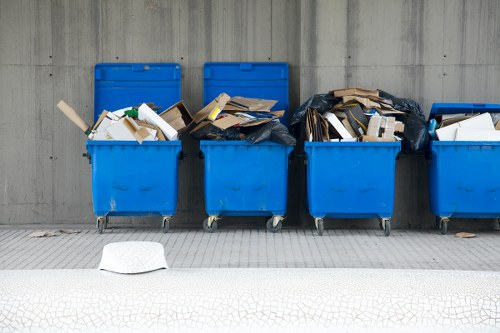 Risk assessment is the foundation of our approach. All clearance activities will be subject to documented hazard identification and risk evaluation prior to commencement. Common risks in a rubbish clearance service area include manual handling injuries, slips, trips and falls, exposure to hazardous materials, sharps and biological waste, traffic and vehicle movements, and unsafe stacking or storage. Actions arising from risk assessment will be captured in a task-specific method statement and communicated to all personnel.
Responsibilities and Management Controls
Senior management hold ultimate responsibility for implementing this policy and for ensuring that a competent safety management system is maintained. Supervisors must ensure that briefings are conducted and that work is carried out in accordance with the agreed safe system. Employees are required to follow instructions, use equipment and PPE correctly, report hazards and cooperate with safety investigations. Contractors and temporary staff will be assessed for competence and integrated into the rubbish company service area safety regime before starting work.Training and competence are essential. Personnel will receive formal induction training covering manual handling, hazardous substance awareness, spill control and correct use of waste containers. Refresher training and toolbox talks will be provided periodically. Records of all training, certifications and licence checks will be retained as part of the service area management records. Supervised on-the-job coaching will address practical skills for safe loading, secure transport and correct categorisation of waste streams.
 The provision and correct use of personal protective equipment (PPE) is mandatory where risks cannot be eliminated. PPE standards include high-visibility clothing, gloves appropriate to the material handled, safety footwear, eye protection and respiratory protection where dust or fumes are present. A basic PPE checklist will be used during briefings and supervisors will enforce compliance. Duties for maintenance and replacement of PPE are clearly assigned to ensure ongoing protection.
Operational Controls and Waste Handling
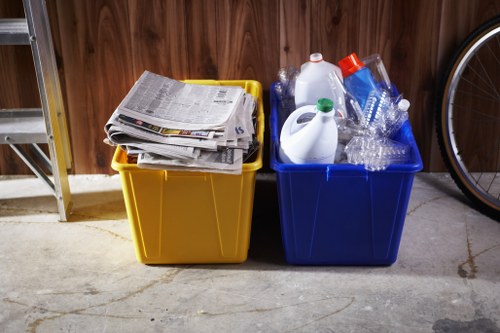
Effective segregation and handling of waste ensures safety and regulatory compliance across a rubbish clearance service area. Waste will be segregated into recyclable materials, general commercial waste, hazardous items and confidential documents requiring secure destruction. Clear labelling of containers, appropriate containment and load restraint during transport are compulsory measures to prevent accidental release or contamination.Manual handling risks are minimised by using mechanical aids and team-lift procedures where appropriate. Vehicles and trolleys must be maintained to a safe standard and checked before use. Loading plans will account for weight distribution and securement. All drivers and operatives operating commercial vehicles will be vetted for competence, briefed on route safety and instructed on safe reversing and pedestrian interaction within the rubbish removal service area.
 Incident reporting, investigation and corrective action form a critical part of continuous improvement. All accidents, near misses and unsafe conditions must be reported immediately through the internal reporting process. Investigations will identify root causes and result in proportionate interventions, which may include training, process change or engineering controls. Findings will be communicated to staff to prevent recurrence.
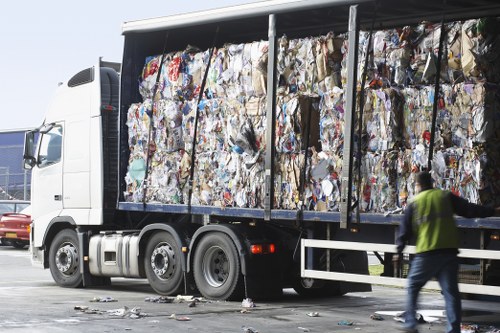 Emergency preparedness and environmental controls are embedded in operational planning. Fire risks, spill response and first-aid provisions are assessed during pre-job planning and appropriate measures are implemented. Spill kits, fire extinguishers and first-aid equipment will be available at operational locations and operatives trained in their use. The rubbish clearance service area will operate procedures to reduce environmental impact, including avoidance of illegal dumping and ensuring waste is transported to authorised facilities.
Monitoring, auditing and review will be performed regularly to ensure that the policy is effective and remains aligned with changing risks and regulatory requirements. Performance indicators such as incident frequency, training completion rates and vehicle inspection compliance will be tracked. Management will conduct periodic audits and an annual policy review. Where gaps are identified, timely corrective actions will be implemented.
In summary, this health and safety policy provides the framework for safe office clearance operations in a professional rubbish company service area. It sets clear responsibilities, enforces safe working practices, and promotes a culture of vigilance and continuous improvement. All personnel are expected to embrace the policy and work collectively to ensure that every office clearance project is completed with safety, dignity and environmental responsibility at its core.
